History of Chinese mantic arts
From bones and manuscripts through institutions, print and digital circulation without substituting legend for date.
Atlas · History · Research method · Education · Global collaboration
04Mantic arts education · Yijing education
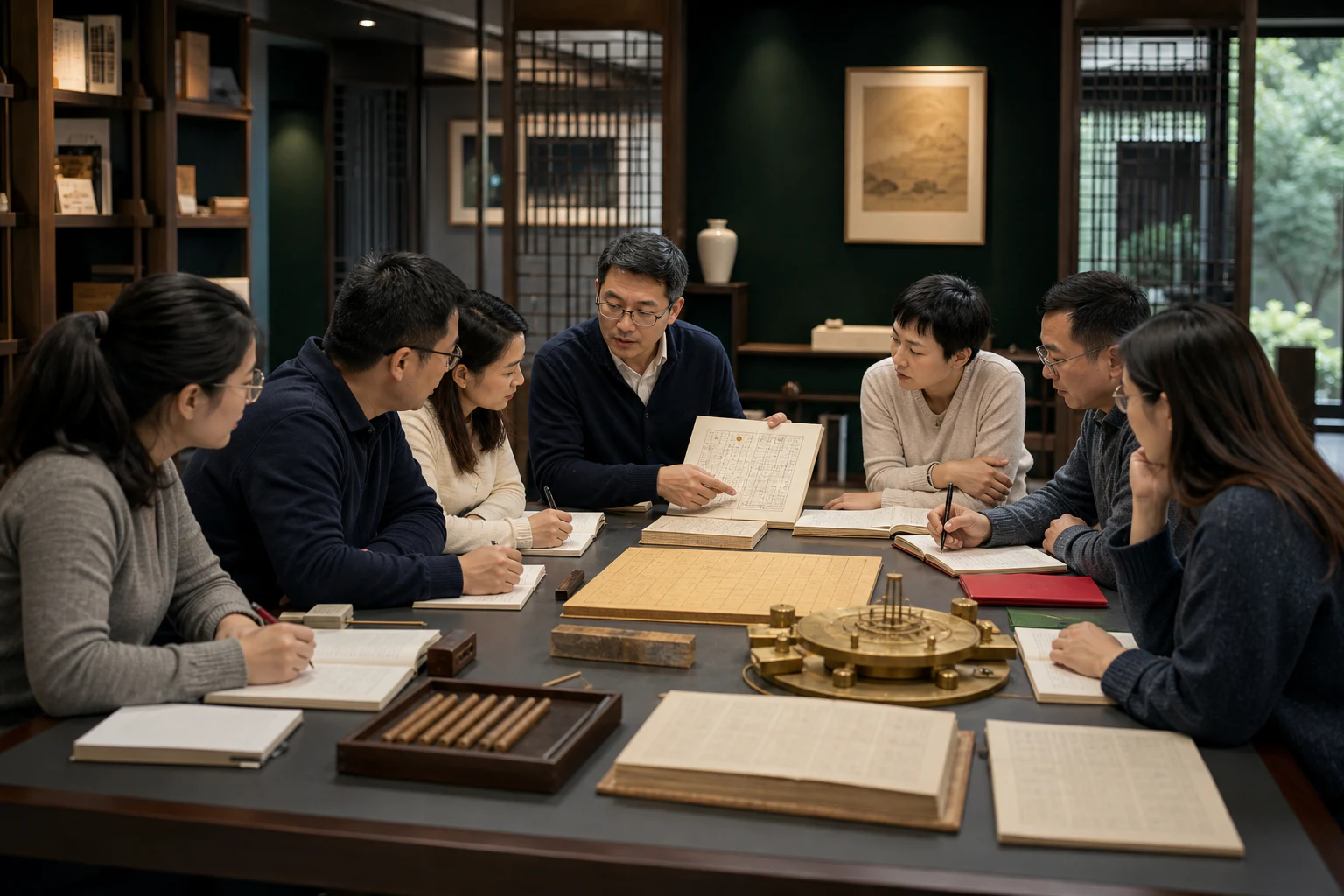
The institute teaches both Chinese mantic arts and the Yijing. Courses examine texts, calendars, procedures, school differences, case records and interpretive limits; memorized judgments are only a starting point.
INDEXPAGE CONTENT
This page states levels, common foundations, specialist tracks, completion flow and publication standards, making the relationship among hours, prerequisites, outputs and credentials explicit.
01Learning path
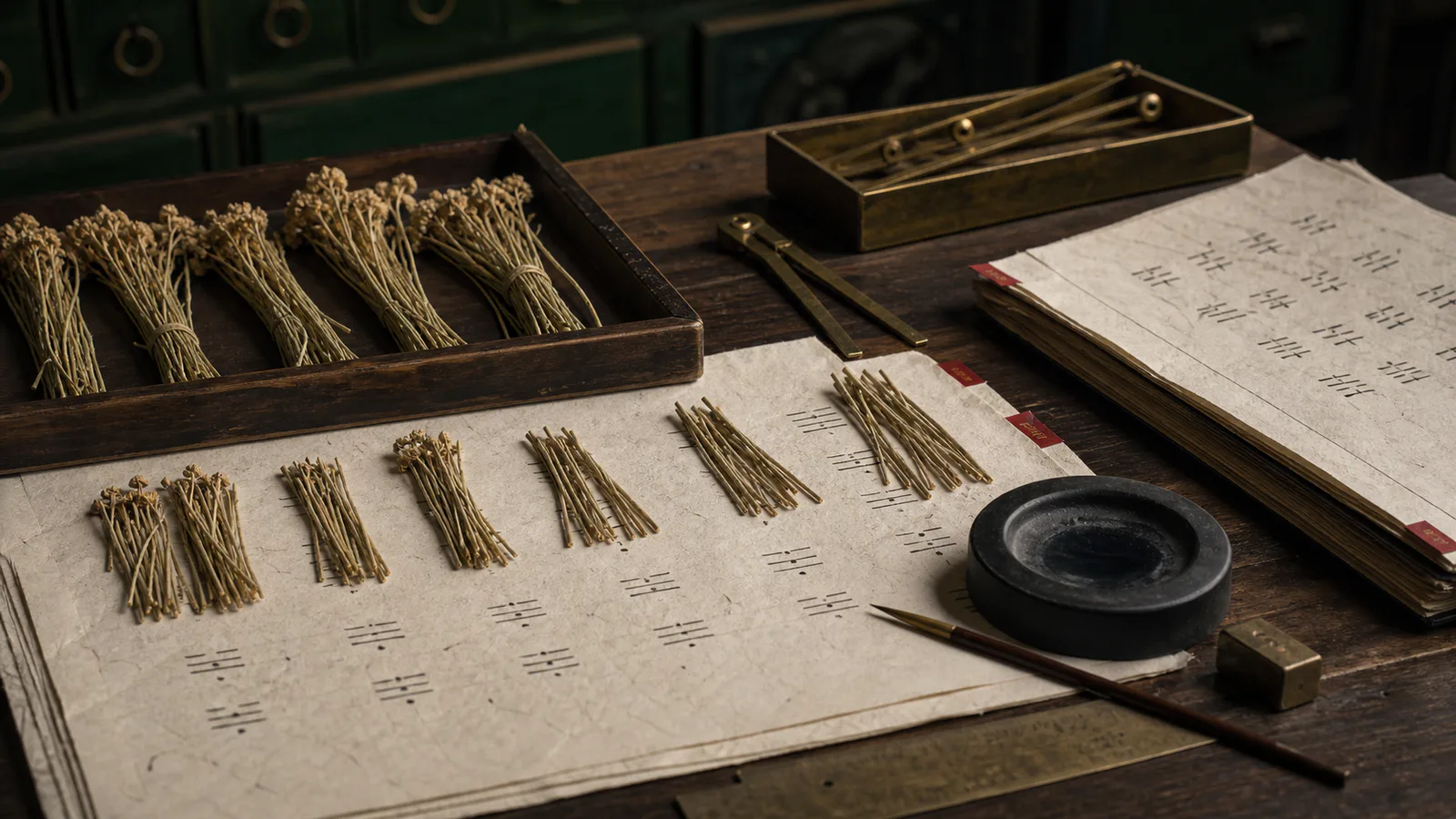
Every level states prerequisites. Where classical Chinese, calendar or mathematical tools are needed, the course provides preparation instead of hiding variation behind generic FAQs.
History, Yijing foundations, evidence layers and ethics for the general public.
Zhouyi, phases, stems-branches, calendars, textual search, classical language and method.
Independent paths in Six Lines, Bazi, Qimen, Ziwei, Liuren, Plum Blossom, Huangji and more.
Compare two arts or versions and complete an annotated paper with method appendix.
Translation, catalog, database, reconstruction, research report or supervised curriculum.
02Common curriculum
Whatever the specialization, first build portable competence in language, time and evidence.
From bones and manuscripts through institutions, print and digital circulation without substituting legend for date.
Separate core text and Wings; learn figures, divination and major interpretive routes.
Understand internal structure and the boundary from modern natural science.
Calendar conversion, month commands, seasonal nodes, hours and chart-time problems.
Terminology, particles, variant characters, punctuation, editions and commentary.
Catalogs, editions, facsimiles, databases, citation and authenticity checks.
Name, establish edition, date, reconstruct, compare and evaluate; formulas become repeatable steps.
Privacy, consent, non-deterministic expression, conflicts and referral in high-risk matters.
03Specialist tracks
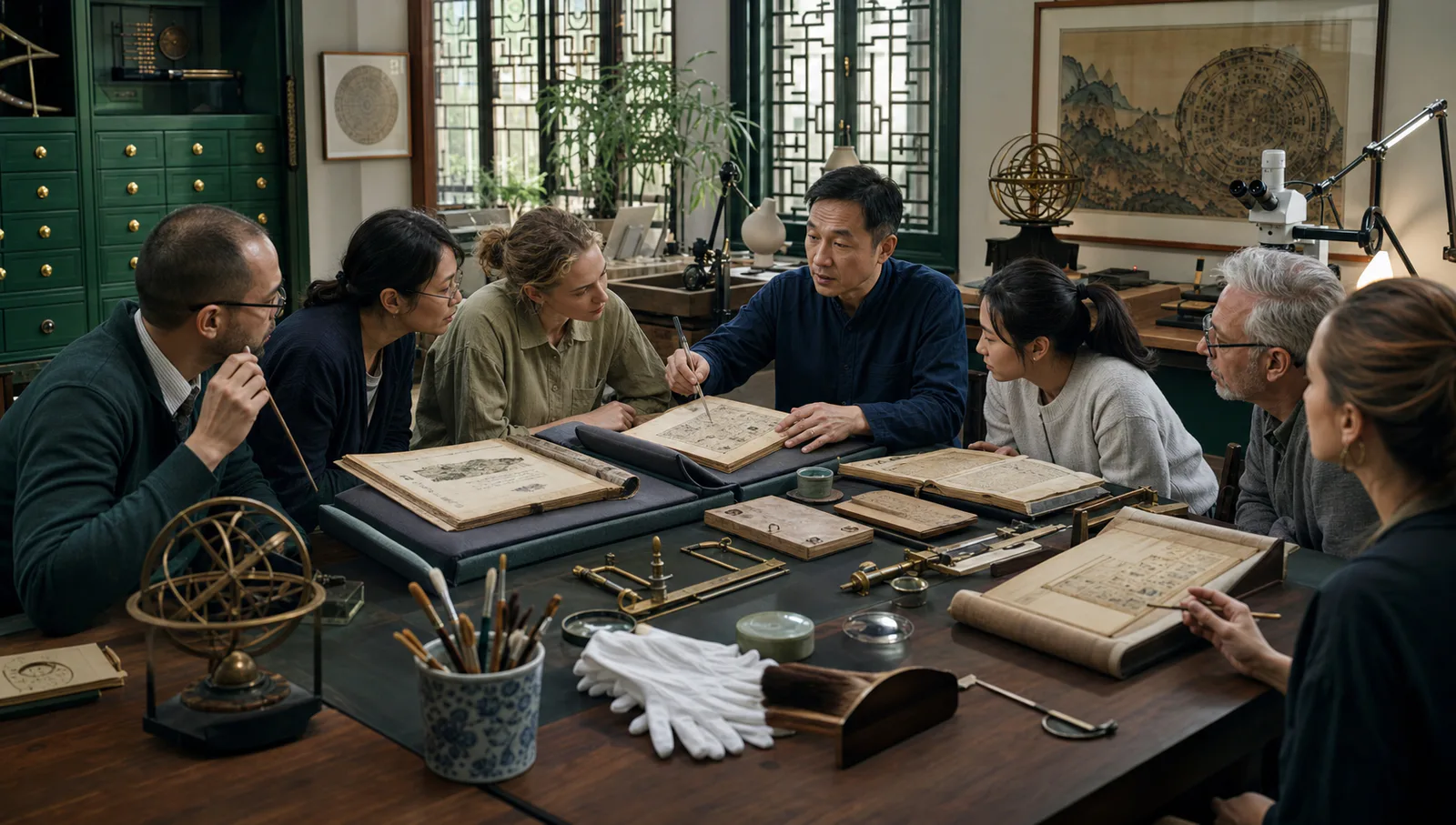
Every track has five blocks: texts and history, chart structure, school comparison, case replication and ethics. Course notices follow one standard for faculty, dates, hours, fees and policy.
Casting, Eight Palaces, branches, relations, host-response, strength, focal signs, change and timing.
Calendar conversion, ten relations, month, pattern, strength, adjustment, cycles and schools.
Nine palaces, Wonders and Instruments, gates-stars-spirits, rotations, calendars and decision models.
Boards, Four Lessons, Three Transmissions, generals, selection rules, patterns and historical cases.
Twelve palaces, star placement, transformations, periods, Ming evidence and modern schools.
Generating images and numbers, body-function, nuclear-change figures, external signs and attribution.
Pre-celestial sequences, nested cycles, sound-number relations, original structure and later divine calculations.
Forms, compasses, schools, daybooks, Twelve Officers and environmental-social history.

Complete edition and terminology units; state calendar, algorithm and scope.
Read source, watch demonstration, reproduce procedure, compare schools and diagnose errors.
Anonymize input, steps, judgment time and outcome criteria; prevent retrospective rewriting.
Knowledge test, textual reading, rule manual, replication, paper or oral examination.
Students meeting published standards may receive an institute internal credential.
PROGRAM STANDARD
The curriculum uses common standards for faculty review, course records and enrollment information. Every course notice states dates, faculty biographies, hours, price, refund policy, assessment and credential status; information outside an official course page is not an enrollment commitment.
MANTICARTS · INSTITUTE
Write to JesunsWu@gmail.com. Prospective students may name a specialization; instructors and practitioners should include a course sample, provenance and ethics statement.