Yijing text and interpretation
Study layers of text and Wings, Han, Wang Bi, Song, Qing and modern excavated traditions.
Atlas · History · Research method · Education · Global collaboration
03Institute · Research
Our research in Chinese mantic arts and the Yijing is built on source tracing, repeatable procedures, version comparison and discussion of limits.
INDEXPAGE CONTENT
This page separates subjects, procedures, long-term projects and output standards so that an abstract claim to research never substitutes for material, method and responsibility.
01Research matrix
From text to algorithm, object to society, Chinese context to global translation: every project states its material, edition, method and limits.
Study layers of text and Wings, Han, Wang Bi, Song, Qing and modern excavated traditions.
Oracle inscriptions, numerical hexagrams, Chu silk, Qin-Han daybooks, boards and Dunhuang manuals.
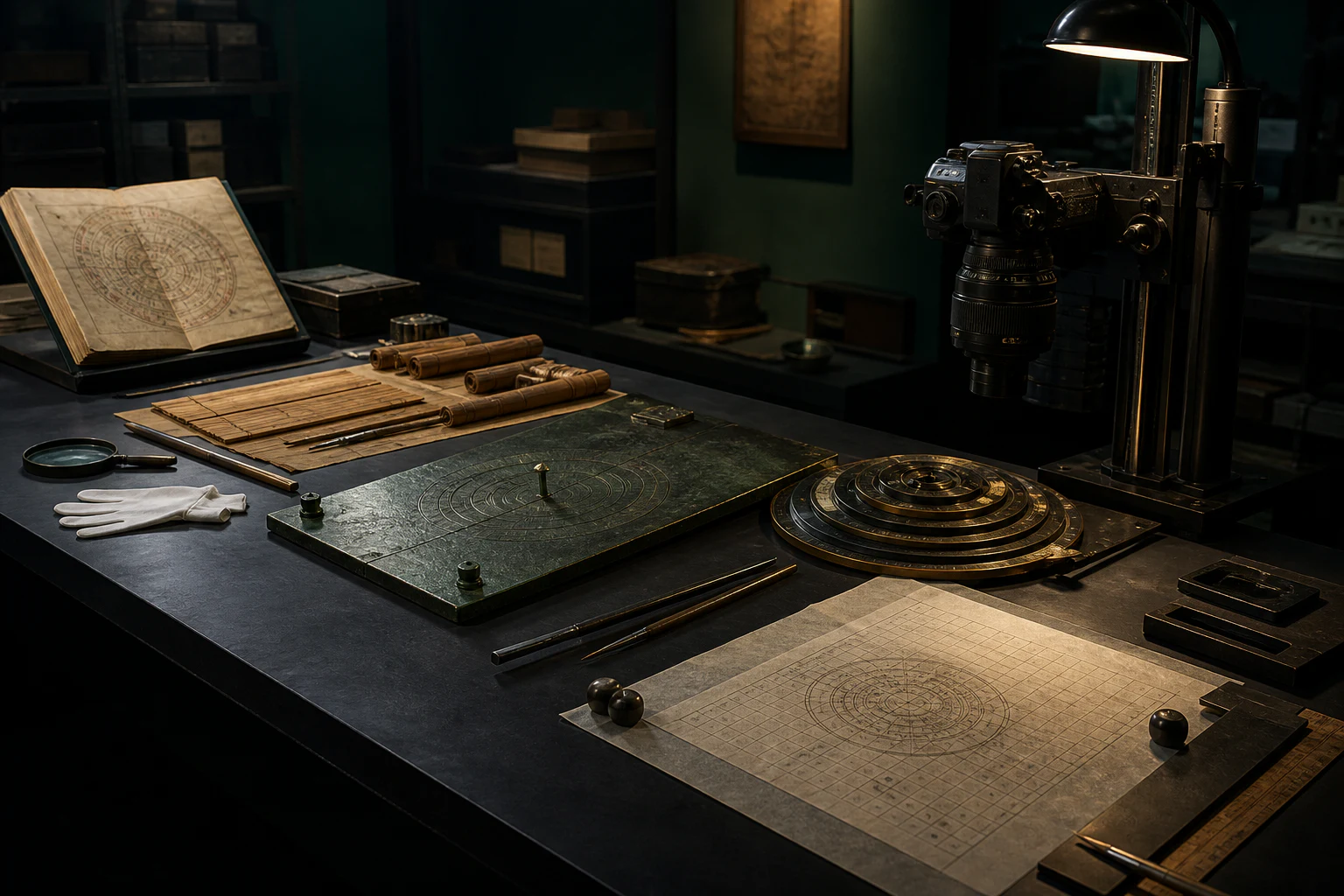
Separate observations, calculations, political calendars and astrological interpretation; reconstruct stems, seasons and months.
Decompose Six Lines, Plum Blossom, Qimen, Taiyi, Liuren and fate systems into input, rules, inference and output.
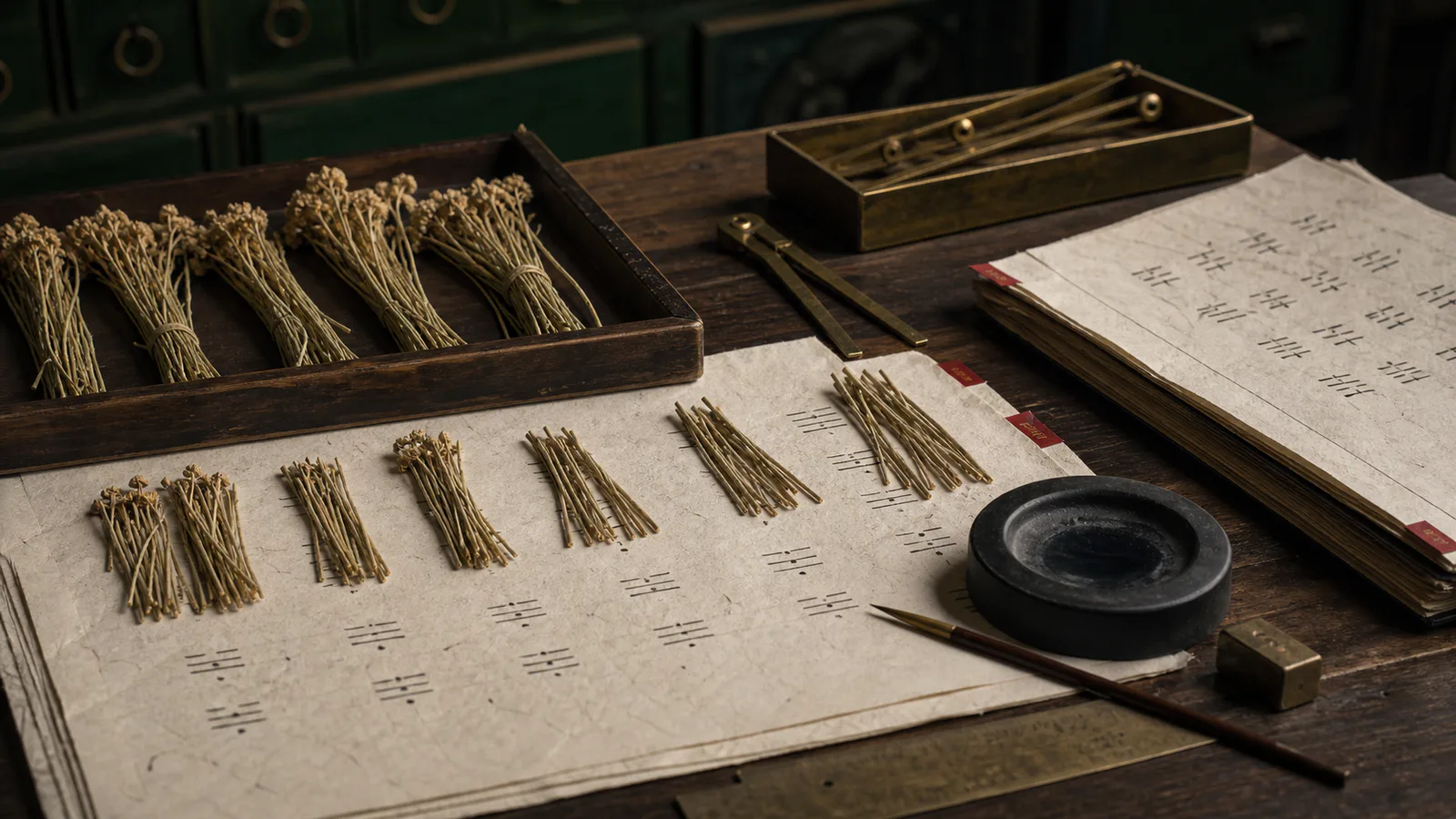
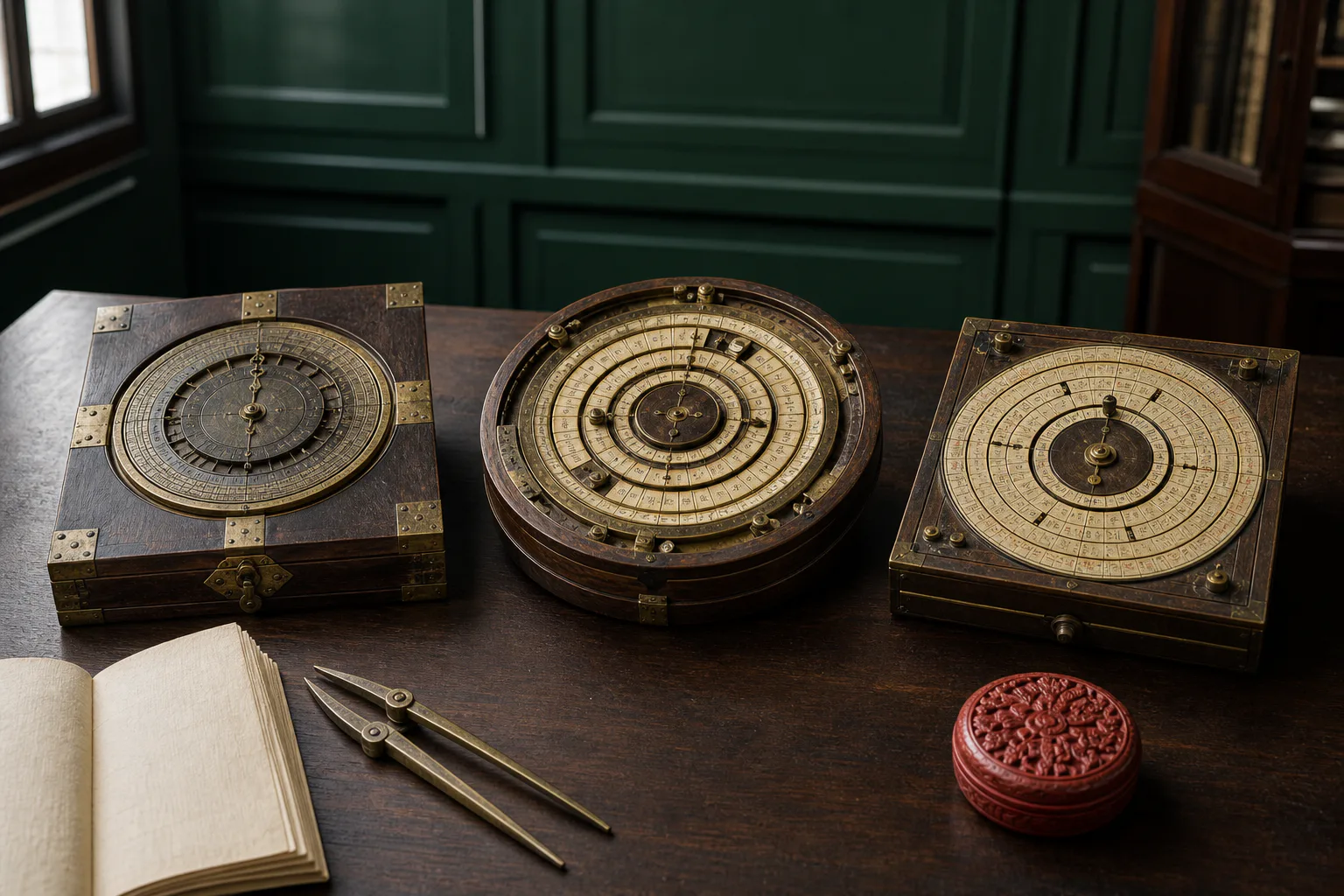
Study bones, yarrow, cosmic boards, compasses, almanacs, site manuals, maps and orientation.
Examine roles in family, commerce, migration, rites, community, religion and modern media.
Separate retrospective cases, prospective records, selection bias and reproducible tests; publish scoring rules first.
Build terminology, edition genealogies, corpora, bilingual annotation and open education.
02Method
Name → establish edition → date → reconstruct → compare → evaluate. Every step leaves an auditable record.
Separate same-name different arts and different-name same arts; record Chinese, aliases, pinyin and preferred translation.
State edition, fascicle, base text, facsimile source and significant variants.
Separate a person's dates, textual composition, surviving witness and modern edition.
Rewrite formulas as steps, marking inputs, constants, exceptions and school choices.
Compare region, period, lineage, text and cases instead of making one route stand for the whole.
Assess historical value, internal coherence, empirical support and ethical risk separately.
03Research projects
The institute organizes priority work through a project system with research leads, collection partners, peer review, version records and publication rules.
A bilingual graph of systems, branches, texts, people, concepts and historical nodes.
Compare epochs, palaces, rotating boards, agents and host-guest models across Taiyi, Qimen and Liuren.
A reliable public pathway into oracle bones, numerical hexagrams, daybooks, boards and Dunhuang.
Record aliases, historical semantics, preferred equivalents and concepts that resist literal translation.
Versioning, timestamps, anonymization and pre-registration for charts and efficacy claims.
Document practitioners, regional differences and modern transformation with informed consent.
Dates, texts, editions and quotations return to identifiable sources.
Another researcher can reproduce the procedure using the same version.
Schools, gaps and uncertainty remain visible instead of being flattened by authority.
Protect privacy, consent and autonomy; do not create fear or dependence on certainty.
MANTICARTS · INSTITUTE
Write to JesunsWu@gmail.com with provenance, research question, publication limits and the collaboration you propose.